

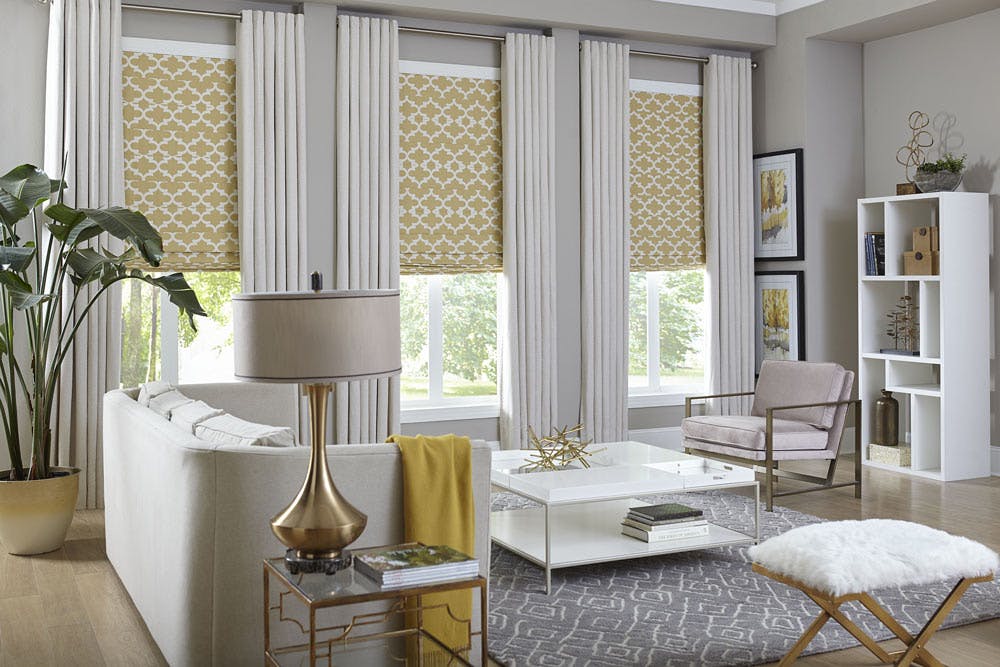
Layering window treatments is one of the easiest ways to add depth, flexibility, and polish to a room. Done correctly, it enhances light control, improves insulation, and creates a more finished, designer look.
The key to successful layering is balance. Each layer should serve a purpose — whether functional, aesthetic, or both — without overwhelming the window.
Start With a Functional Base Layer
The base layer is usually mounted closest to the window. This might be a roller shade, roman shade, or light-filtering blind.
This layer handles privacy and light control. In bedrooms, a blackout custom roman shade works well. In living spaces, light-filtering options allow natural brightness while softening glare.
Choosing a neutral fabric for the base keeps the look versatile and cohesive.
Add Curtains for Softness
Curtains are typically installed over the base layer. They introduce movement, texture, and warmth to the room.
Full-length custom curtains create elegance and height, especially when hung near the ceiling. Even in more casual spaces, curtains soften architectural lines and make the room feel more inviting.
Layering roman shades with curtains provides contrast and dimension.
Choose Complementary Fabrics
When layering, fabrics should complement rather than compete. If your base shade is textured, opt for smoother curtain fabric. If the curtains carry subtle pattern, keep the shade simple.
Sticking to a consistent colour palette ensures harmony. Tone-on-tone layering — for example, soft beige shades with slightly deeper linen curtains — creates a sophisticated effect.
Balance Light and Privacy
Layering allows flexibility throughout the day. During daylight hours, you can rely on the base layer for privacy while keeping curtains open.
In the evening, closing the outer curtains adds insulation and a sense of cosiness. This adaptability makes layered treatments ideal for living rooms and bedrooms.
Mind the Proportions
Proportion is essential. Curtains should be wide enough to frame the window properly and long enough to reach the floor.
The base shade should fit neatly within the window frame whenever possible. A tailored inside mount prevents the layers from looking bulky.
Well-measured installations ensure a polished, intentional appearance.
Use Hardware Thoughtfully
Curtain rods and tracks should support both layers without crowding the window. In some cases, double rods allow sheers and heavier panels to hang independently.
For a cleaner look, ceiling-mounted tracks can conceal hardware and create a seamless flow from top to bottom.
Keep finishes cohesive with other elements in the room.
Consider Room Style
Layering works beautifully in traditional, transitional, and contemporary spaces when styled appropriately.
Modern interiors benefit from streamlined combinations like flat roman shades paired with simple linen panels. More classic rooms may embrace soft sheers under heavier drapery.
The layering approach should reflect the overall aesthetic of the space.
Avoid Over-Layering
While layering adds depth, too many elements can feel heavy and cluttered. Stick to two complementary layers rather than adding multiple treatments.
Restraint keeps the window elegant and functional rather than overly decorated.
Final Thoughts
Layering window treatments is about combining practicality with visual appeal. A well-chosen base layer paired with thoughtfully selected curtains creates flexibility, texture, and balance.
When proportion, fabric, and hardware are carefully considered, layered treatments elevate the entire room — offering comfort, privacy, and timeless style in one cohesive design.